Wednesday, March 19, 2014

Animal Hide and Seek


Animal Hide and Seek
Written by Penny Smith
Dorling Kindersley Limited, 2006
Non-Fiction
33 pages
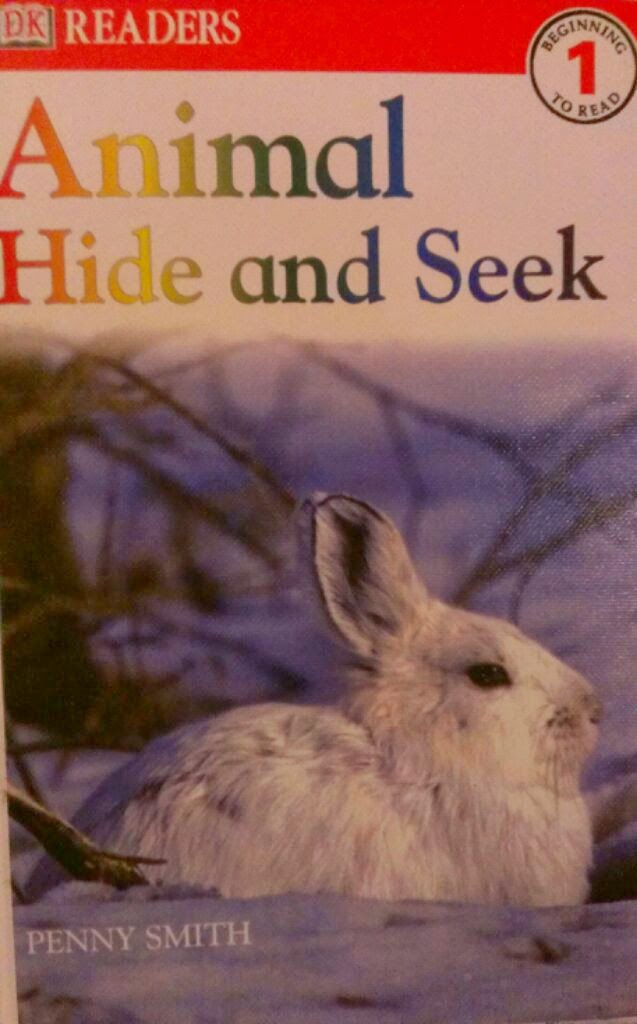
Animal Hide and Seek is a spectacular book to read to students in an elementary school setting. This book is a great science book that helps describe the struggle of staying alive for some animals. You see, animals have their own secret way of adapting to nature to better protect themselves from harm. How do animals do this strange thing in nature? Is this strategy successful for most? What kinds of things do animals do to protect themselves from harm? Read this book to answer all of your questions.
The pictures in this book were produced by several photographers. Many of the pictures were reproduced for this book, Animal Hide and Seek. However, the book has marvelous pictures that help express the information within the text. Each picture is very detailed and shows very vivid descriptions of the animals who like to hide from predators. The pictures also help to visualize the animals being described within the book. All in all, the pictures go hand in hand with the text to help deliverer the information to the fullest.
This book can be cooperated into the classroom in three different ways. The first way is by using the information in the text to support a science lesson about camouflage. Secondly, this book has a great picture glossary. Throughout the text, there are several vocabulary words. The vocabulary words are pulled out to the side and have pictures representing the vocabulary word. Lastly, I could also use this book to help show students examples of well rounded simple sentences.


W.K. Kellogg


W.K. Kellogg
Written by Tiffany Peterson
Designed by Herman Adler Design
Heinemann Library, 2003
Non-Fiction
32 pages


W.K. Kellogg is a magnificent informational book. This book tells the story of one man’s fight for success. This book gives a reader very useful information on W. K. Kellogg. This book begins by briefly telling the early years of Kellogg’s life. Then, the book takes a turn and starts describing Kellogg’s struggle to become a sales person. You see, Kellogg and his brother, John Harvey, invented something very rare to the 1800s. What is this strange new invention? Will Kellogg make it to the top? Just how good of a salesman is Mr. Kellogg?
The pictures within this book play a huge role in expressing the life and success of W. K. Kellogg. Most of the pictures are colored in black and white. The readers can also tell that most of the pictures were taken around and about the 1800s. On the other hand, there are a few colored pictures within the book too. With this combination of pictures, the book is expressed to the fullest with both pictures and text. All in all, the pictures do a grand job creating emotion in this informational book about W. K. Kellogg.
I would recommend using this book in a second or third grade class. This book can be integrated into the classroom in three different ways. First, this book could be used to help give an example of a glossary. If the use of a glossary is being introduced, than the students can use this glossary for a real visual example of what it is. Secondly, this book could be used to integrate in timelines and sequencing of events. There is a great timeline located in the back of the book by the glossary. Then lastly, this book could be use in the classroom to introduce careers. W.K. Kellogg was trying to become a salesman in his lifetime. His career choice could be used to give an example of a career path.

Wednesday, February 26, 2014

Read a Rhyme, Write a Rhyme


Read a Rhyme, Write a Rhyme

Poems selected by: Jack Prelutsky

Illustrated by: Meilo So

Random House Inc. 2005

Collection of Poetry

28 pages

This book by Jack Prelutsky is a great way to introduce poetry to students within a classroom. The book of poems consists of about twenty four poems that range in themes. The themes the poems describe are things such as feelings, animals, bugs, and much more. The author even has a section on every other page that starts a rhyme/poem. This helps students to understand how a poem starts and it allows them to finish it with their own version of that specific themes. Don’t be afraid, come and step into a world of poems that will hold you captive within their lines and rhythms.

The Illustrations within this book play a role in the background meaning of the poems. One piece of artwork can explain more than one poem within this book. The each illustration is created around a single theme and is spread widely across two pages. Meilo So, the illustrator, does a spectacular job capturing the illustrations on each page. She uses a variety of things to create her artwork in many of the books she illustrates. However, in this book she uses watercolors to express her art. Her illustrations express emotions and create vivid visuals for the poems.

This book by Jack Prelutsky is an excellent choice of poetry to use within a classroom. This book has about three different ways that it can be integrated into an elementary school class. First off, this book has plenty of examples of poetry within its pages. This can help students to better understand rhyming and how poetry flows. This book is also a great choice because there is a “poemstart” for each theme. The “poemstarts” are placed in this book to guide students while they learn how to write poems and rhymes. Lastly, this book can be integrated into the classroom by introducing the different types of poems and poetry. This book is an extravagant way for students to explore the variety of poems while comparing and contrasting the different types of poetry. All in all, Read a Rhyme, Write a Rhyme is a book will get you excited about poetry.


Hello School: A Classroom Full of Poems


Hello School: A Classroom Full of Poems

Written by: Dee Lillegard

Illustrated by: Don Carter

Random House Inc. 2001

Collection of Poetry

28 pages

            This story, by Dee Lillegard, expresses a variety of ways to introduce the everyday things that a child would see at school on a daily basis. A child could read these poems and understand what the different things look like and do while at school. Within this book, students can lose themselves in a tour through an already familiar setting. Nevertheless, this book is a creative way to get students to remember the aspects of things they do and use at school. All in all, Dee Lillegard does a fantastic job expressing each poem in a simple and catchy way for students to remember.

            Don Carter, the illustrator, creates his artwork in such a way that the pictures seem to pop right off of the pages. He helps to create this three-dimensional art by using an assortment of ways to create his art. He uses foam board, plaster, and acrylic paints to express help express Dee Lillegard’s poems. Don Carter is a very well known illustrator and is currently living out his passion as a children’s book illustrator.

            This book can be used in several different ways within a classroom. One way this book of poems can be used is by showing examples of onomatopoeias. This can be used while introducing the concept of onomatopoeias. Another way this book can be related to the classroom is when rhyming comes into play. There are tons of rhyming words within this book that would be a great way to introduce rhyming words. Lastly, this book of poems can be integrated into the classroom when a child is new to the whole school experience. The poems in this book consist of poems about school and things within school. Nevertheless, this book is a great book to use within a classroom setting.

Goldilocks Returns


Goldilocks Returns

Written and Illustrated by: Lisa Campbell Ernst

Scholastic Inc. 2000

Traditional Literature

40 pages

            Everyone knows the story about Goldilocks and her visit to the three bears. However, have you ever wondered what happened to poor little Goldilocks after she left the cottage of the three bears? Goldilocks Returns takes place when Goldilocks grow up. She has constantly been reminded about how she snooped around in the bears’ house. Nevertheless, she is very upset with herself and believes that she must make the whole confrontation better.  How will she correct what she did so many years ago? Will the bears allow her to even be near them? Read Goldilocks Returns to find out!

            Lisa Campbell Ernst does an unbelievable job at expressing the story with her illustrations. The illustrations really compliment the text throughout the entire book. Her artwork is expressed on the pages with watercolor and shading. The emotions of the characters are captured within the illustrations. The illustrations simple add more meaning to the story as you read and examine the artwork along the way.

            This traditional literature book has several ways that it can be integrated into a classroom setting. I would use Goldilocks Returns in my class to help introduce new vocabulary words. There are several words that Lisa Campbell Ernst uses to create her story. However, these words can be strange and new to a child. Next, Goldilocks Returns would be a great story to compare and contrast how the characters where in the original book and how they are in this story. Lastly, this book could be read while introducing career paths. Goldilocks is a locksmith in this newer story. The story even shows clues that help you to realize that she is a locksmith. All in all, this story is a great twist on the already known book about Goldilocks.

The Elves and the Shoemaker


The Elves and the Shoemaker

Retold by: The Brothers Grimm

Illustrated by: Jim LaMarche

Raincoast Books 2003

Traditional Literature

28 pages

            The Brothers Grimm retells an old story about a shoemaker and his wife. They had a spell of bad luck and became more and more poor. However, on night the shoemaker leaves his blueprints to a pair of shoes lying in his shop. The next morning, to the shoemaker’s surprise, the shoes were completely done and looked extravagant. Before long, the shoemaker started to leave more outlines every night before he went to bed. Then every morning, just like before, the shoes were completed and ready to sale. Who has been helping the shoemaker and his wife? Is magic creating the shoes for him to sale? To find out, you must read The Elves and the Shoemaker.

            The illustrations, created by Jim LaMarche, are very vivid and realistic. The people and things within the pictures seem almost real. Every detail is very well thought out and executed within the pages. Jim LaMarche used a variety of things to help capture his artwork. He used watercolor paper to bring his acrylic washes and colored pencil art to life. The illustrations go hand in hand with the story. Without the illustrations, I believe that the story wouldn’t be as detailed and exciting to read.

            This story is a great book to integrate into a classroom environment. There are three different ways I would use this in my own classroom. First, this story has a lot of large vocabulary words within the text. This would be a great way to expand my students’ vocabulary knowledge. Also, within the story the shoemaker’s customers paid him double the original price of the shoes that were created. This would be a great way to bring doubling figure in math into the picture inside my class. Then lastly, I can relate this book to a narrative writing lesson. I would ask my students write what they would do if they were visited by someone in the night that made things for them so they didn’t have to the next day.